
Updated September 24, 2026 · By Emiliano Ubaldi
A customer does not always know the words for what they want. They may start with a photograph, compare similar products visually and then ask a detailed question. Visual and multimodal search make the relationship between your images and your information especially important.
Give each image a clear job
Google’s image SEO guidance emphasises discoverable images, relevant page context and descriptive alternative text. Start with clear assets that accurately show the subject, supported by text that explains what the visitor is looking at.
Use descriptive filenames and sensible image dimensions. Keep important images available through crawlable image elements, and provide concise alt text that describes their purpose. Repeating keywords is not a substitute for a useful description; decorative images may appropriately have empty alt text.
Keep the product facts connected
For eligible retail listings, Google Merchant Center’s product-data guidance highlights reliable identifiers and accurate information. Images, product variants, availability and landing-page details should agree. A discovery experience becomes frustrating quickly if the item shown cannot be found or the price changes unexpectedly on arrival.
Where appropriate, add structured data that accurately represents visible product and offer information, then validate it. Structured data helps describe a page; it does not guarantee a rich result or inclusion in an AI answer.
For dealerships, follow the requirements of the specific vehicle-listing programme and market. Do not assume a standard retail product feed covers every vehicle-advertising use case. Keep individual vehicle imagery and inventory details tied to the correct listing.
Make the next step as clear as the image
Visual attention is only the beginning. A visitor may need dimensions, compatibility, finance details, a comparison or a way to confirm availability. Build that information into the landing experience rather than making the customer restart their research.
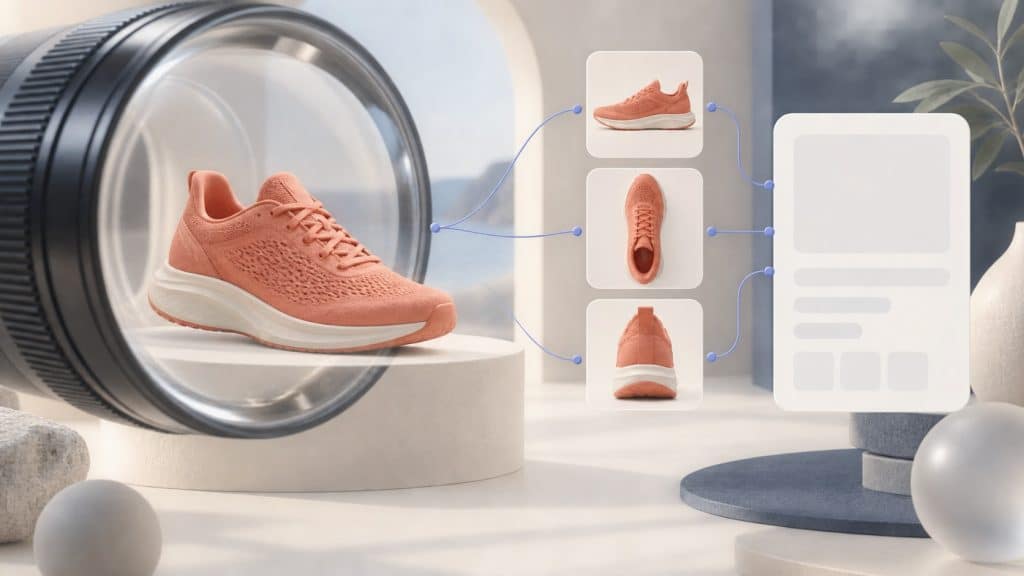
AI-generated illustrations can explain an editorial concept, as the illustration accompanying this article does. Actual product listings need images that truthfully represent what is available; an attractive invented detail can create the wrong expectation.
My first audit would cover a small sample of important pages: can the images be discovered, do descriptions make sense, do facts match, and can a mobile visitor take the next step? Then review relevant visits and enquiries to see where the experience still breaks down.
Let’s make your website easier to discover and easier to act on.
Illustration generated with AI for IM Advise.